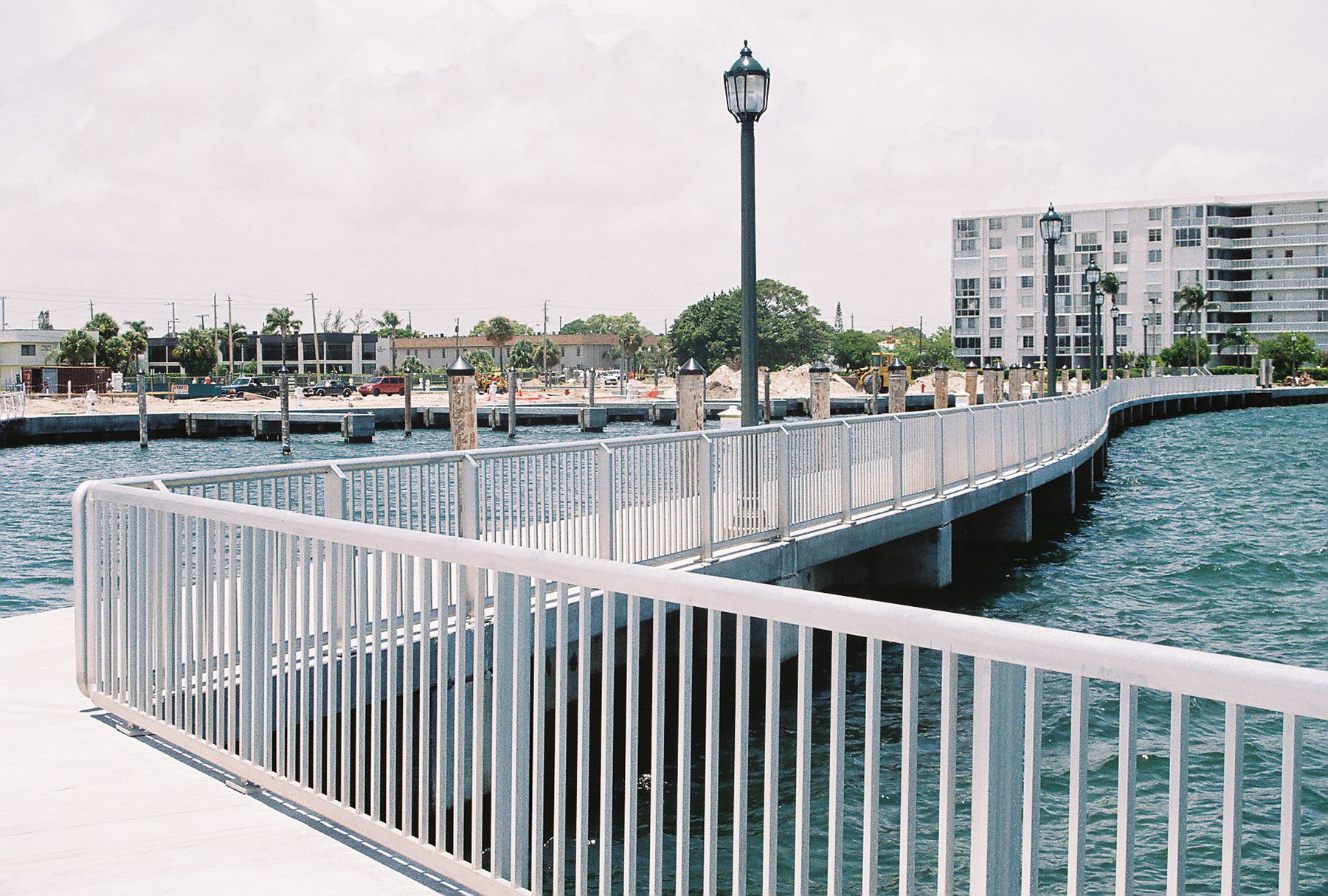
In Florida, handrails are more than a finishing touch—they are life-safety systems that must perform under daily use, salt air, and hurricane winds. Whether on a residential staircase, a marina access ramp, or a public boardwalk, properly designed and detailed handrails protect users and help projects pass inspection the first time.
Why Handrails Matter Handrails provide users with a continuous graspable surface to steady themselves on stairs, ramps, and elevated walkways, significantly reducing slip, trip, and fall incidents. In Florida’s humid climate, where exterior walking surfaces can be wet or slippery from rain and condensation, that redundancy is especially important. For public and commercial projects, handrails are also a key part of building-code compliance and liability risk management. A non-compliant or poorly anchored rail system can become a failure point during an emergency evacuation or wind event.
Core Florida Code Requirements Florida adopts the Florida Building Code (FBC), which is based on the International Building Code but with state-specific amendments for high-wind and coastal conditions. Under the FBC, typical stair handrail heights must fall between 34 and 38 inches measured vertically from the stair nosing, with similar height limits for ramps measured above the ramp surface. The code also requires handrails to be continuous along the full length of the flight or ramp they serve, with only limited interruptions allowed at newel posts or transitions.
Graspability is another critical requirement: rail profiles must be sized so that users can wrap their fingers around the rail for a secure grip, whether circular or non-circular in cross-section. Clearances between the rail and adjacent walls are regulated to avoid pinch points and ensure space for the hand, typically with a minimum clear distance of about 1.5 inches. Where handrails also serve as guards at elevated edges, they must meet more stringent height and opening limitations to prevent falls.
Coastal and Hurricane Considerations In high-wind regions like coastal Florida, the FBC and local amendments emphasize anchorage strength and durability under hurricane-level loading. Exterior stair and ramp assemblies, including their handrails, must resist uplift and lateral loads imposed by wind pressures and wind-borne debris, often demonstrated through tested assemblies such as Miami-Dade Notice of Acceptance (NOA) products. This has direct implications for connection detailing—anchors, brackets, and posts must be specified for both structural capacity and corrosion resistance.
Salt-laden air accelerates corrosion, particularly on unprotected carbon steel or improperly specified fasteners, which can weaken handrail supports long before the expected design life. To mitigate this, exterior coastal projects frequently rely on stainless steel, powder-coated aluminum, or hot-dip galvanized steel components, combined with stainless or similarly corrosion-resistant fasteners. Giralt Enterprises evaluates exposure category, distance from the coast, and maintenance expectations when recommending specific material systems for each project.
Material Options for Florida Projects Common handrail materials include:
- Aluminum: Lightweight, corrosion-resistant, and available in modular systems that facilitate installation and future repairs. Powder coatings can add aesthetic flexibility while providing an extra layer of protection in marine environments.
- Stainless steel: Offers excellent corrosion resistance and strength, making it popular for high-end waterfront applications and public facilities exposed to salt spray.
- Steel (painted or galvanized): Often used where high strength and custom fabrication are required, with hot-dip galvanizing and robust coating systems to manage corrosion.
- Composite or vinyl systems: Sometimes used in residential settings for low maintenance, but must still be engineered and anchored to meet FBC load requirements.
For each project, Giralt Enterprises balances aesthetics, code compliance, and long-term maintenance costs, often combining metal handrails with concrete or masonry supports engineered for coastal wind and impact loads.
Accessible Design and User Experience Beyond code minimums, thoughtful handrail design improves accessibility for all users, including older adults and people with mobility or vision impairments. This includes maintaining consistent heights, avoiding sharp edges, and ensuring there are no abrupt terminations that can catch clothing or create hazards. On ramps and accessible routes, handrails are required on both sides in many cases, and clear widths between rails must remain adequate for wheelchairs and walkers.
Good detailing also considers transitions—from stairs to landings, and from interior to exterior environments—so that the rail remains intuitive to follow in low-light or emergency conditions. Giralt Enterprises incorporates these human-factors considerations, not just to “pass inspection,” but to create safer, more comfortable spaces for daily use.
How Giralt Enterprises Supports Your Project: From small residential stair retrofits to complex multi-level public access structures, Giralt Enterprises provides Florida-specific handrail engineering and detailing that align with the latest FBC requirements. The team coordinates closely with architects, fabricators, and contractors to ensure that handrail systems are both buildable and durable in Florida’s challenging climate. For owners and agencies, this means reduced risk of code violations, longer service life, and safer facilities that better protect the public.